RSS

5 Smart Ways to Use a Home Equity Line of Credit

For homeowners across the globe, home equity lines of credit (HELOCs) have become a handy way of tapping into the value of their homes. However, when borrowing money against your home, it is always a good idea to be a little cautious about what you spend it on. As such, it usually isn't a good idea to use a HELOC to pay for a vacation or buy a new TV. So then, what should homeowners use HELOCs for?


1) Home Improvements
Using a HELOC to make improvements to your home can be a great way to increase the property's value. Whether you want to install a pool, renovate the kitchen, or add a bathroom, tapping into your home's equity is an easy and efficient way to finance the project. In some cases, you might even find that you have more equity in your home after the project has been completed than you did before you used your HELOC.

2) Emergency Fund
Ideally, it is a good idea to have about six months’ worth of expenses tucked away. If you are in a crunch, your home’s equity can serve as a low-interest alternative to credit cards or payday loans. Keep in that that if you do not already have one in place, it may be difficult to qualify for one when an emergency arises.

3) Refinancing Debt
If you have a large amount of high-interest debt, using a HELOC can be a great way of enjoying a lower interest rate. Many forms of debt, such as personal loans and credit card debt are unsecured. As such, they can come with interest rates as high as 20%. However, since your HELOC is secured by your house, you are likely to be able to receive a much lower interest rate. Depending on your circumstances, refinancing high-interest loans into a HELOC can potentially save you thousands of dollars.

4) Long Term Investments
Some homeowners may choose to use their HELOC to invest in the stocks or the real estate market. There are always risks when it comes to any sort of investment so make sure you do your homework. You do not want to overvalue a property or underestimate the costs involved in any investment. If you are looking to invest in something riskier with a higher return, there are many other options.

5) Paying For Education
If you are planning on sending your child off to college soon, or are even thinking about going back yourself, a HELOC might just be a viable way to pay for the tuition costs. Since HELOC interest rates are usually fairly low, they can sometimes compare favorably to traditional college loans. Of course, it is a good idea to closely compare your options before committing to either one.

In Conclusion
Though HELOCs can be an excellent way to access the equity in your home, it is always important to be careful about how you spend your money. By choosing to use your HELOC for one of the uses outlined in this article, you can ensure that your home's equity is being well spent.

For more information contact me today!

Read

What should you consider when refinancing your mortgage?

Mortgage rates are at a historic low. If you're thinking about refinancing your mortgage, you could possibly save significant amounts of money over the years. Especially in the first years of owning your home, a large percentage of your monthly mortgage payment actually goes toward paying interest rather than the principal.


Refinancing your mortgage is usually done for one of the following reasons:

- To lower your interest rate


This is one of the most common reasons. If you first obtained your mortgage when interest rates were higher, refinancing enable you to save money each month. You may also qualify for a lower interest rate if your credit rating has improved since you first qualified for your home loan.

- To change the length of your mortgage


When you refinance your mortgage, you're really obtaining a new one. You can choose to lengthen or shorten your term - whichever you'd prefer. Generally, shorter mortgage terms have lower interest rates.

- To obtain a different type of mortgage


If you have an ARM (Adjustable Rate Mortgage), your interest rate can fluctuate. You may want to refinance so you can have a fixed-rate mortgage.

What should you consider?

To make sure you'll actually save money by refinancing, it's important to look at the whole picture to know if it's the right decision. Just because interest rates may be lower now than your current interest rate doesn't necessarily mean that you should refinance. Here are some important considerations to keep in mind:

- Fees involved
Your new loan may have a variety of fees with it, including closing costs and an appraisal. Some lenders can fold these fees into the loan so you can pay for them over time rather than upfront. You'll need to weigh any fees you'll have to pay against any savings you might reap.

- How long you've lived in your home
If you've lived in your home for a long time, most of your monthly mortgage payment is probably going toward the principal rather than the interest. If you refinance and get a new loan, you'll be in the opposite situation - most of your monthly payment will be paying interest.

- When you plan to move
If you don't plan to stay in your home for long, you may not have time to recoup enough savings to offset the costs of refinancing.

- Why you want to refinance
Refinancing purely to save money is perhaps the simplest decision. But if you want money to, for example, pay off debt, your decision can be more complicated. It may help your financial situation in the short term, but will it help in the long run?

Refinancing calculators can help you figure out if refinancing is right in your particular situation. Some calculators will estimate the rate you'll need to get to warrant refinancing, while others will help you determine how much you'll save each month. These calculators will provide estimates, not guarantees.

Refinancing your mortgage can often save you money, but it's important to understand your particular circumstances and the details of your new loan thoroughly.

Read

6 Signs a Home Will Likely Increase In Value

A home is a massive investment. Any new homeowner will naturally hope their investment will gain value. While nothing in life is guaranteed, there are some excellent indicators that a home is likely to substantially increase in worth over the years. Here are the six main signs to look for.


1. A nice neighborhood. Location often plays the largest role in determining home value. Consider what can be found in close proximity to home. Are there quality restaurants, cafes, good grocery stores, banks, and department stores relatively nearby? How about pleasant parks and trails? Most importantly, is the area safe and crime-free?


2. A pleasant street. Virtually all home buyers prefer a house found on a quiet street with a nice atmosphere. Think big leafy trees and well-maintained lawns -- the kind of place it would be enjoyable to walk in. Homes that are obviously run-down are a huge negative -- for example, a house that looks as if it hasn't had a fresh coat of paint in decades.


3. A strict homeowners association (HOA). Restrictive homeowners associations can be a huge pain to deal with. On the flip side, they are also great for resale value. The restrictions an HOA places on homeowners helps ensure the neighborhood doesn't go to seed and thereby damage home values.


4. A family-friendly design. Many homes are bought by young couples who are either planning for children or already have them. To be suited to families, a house should have three or four bedrooms and multiple bathrooms, including at least one bathtub. An open layout and the presence of a yard are also advantages.


5. A good school district. When deciding where to buy a home, parents may care more about the local schools than the home itself. While schools rise and fall in quality, the change is generally gradual, so being located in a solid school district is a strong indicator of future home value.


6. Timeless design. Generally, a home that stands apart is worthless. A home with quirky, unusual features will have less mainstream appeal and thus less resale value. In contrast, design choices that appeal to almost all tastes will always sell well. Think features such as hardwood floors, a spacious, open floor plan, tall ceilings, and lots of natural light.


Many homebuyers imagine they will stay in their new home for the rest of their lives. However, that usually doesn't happen. The exigencies of life mean that moving at some point in the future is likely. That's why the potential resale value of a home always matters a lot, and should always be taken into consideration.

Read

6 Persistent Real Estate Myths You Really Need to Ignore

Whether you're a home-buyer or a seller, it pays to understand the real estate market if you want to get a good deal. Unfortunately, a series of damaging ideas has grown up around real estate which can get in the way of a smooth transaction for both sides.


Here are six of the worst myths you need to ignore.


1) Spring is the Busiest Season.


Traditionally, the best time to list a home was in spring. This was because parents would try to move home over the summer holidays, minimizing the disruption to their children's education. Naturally, spring became the busiest season with the most homes appearing on the market.


However, today's home-buyer profile is a lot more varied than in the past. More than half of buyers are unmarried and have no children, and the school timetable is no longer nearly so relevant.


Instead, as a seller focus on getting your home In the best sale-ready condition you can before listing, rather than rushing to meet an outdated deadline. And as a buyer, start your search whenever you're ready to move, whatever time of year that is.


2) Start With a Low Offer


When you've found a home you want to buy, the traditional advice is to put in a low offer far below what you're really prepared to pay. The idea is to test the water and avoid paying more than you need to.


Today, this is poor advice. Whatever the overall state of the real estate market, desirable properties can sell extremely quickly. If you put in too low an offer, you run the risk of being outbid by another buyer leaving you no time to react.


What's more, most asking prices today are set according to well-established guidelines, and the vast majority of homes are priced more or less correctly. As a buyer, offering an insultingly low figure makes you seem like a time-waster, alienating the seller and souring negotiations from the start.


As a seller, if you receive an offer far below what you're asking for, you shouldn't hesitate to reject it out of hand rather than using it as a starting point for negotiation.


3) Cash is King 


It's often thought that a cash payment is the most attractive option for a seller, and therefore the best choice for a hopeful buyer. This idea is completely without foundation.


The vast majority of homes are bought using a mortgage, and it's the expected mode of payment. If anything, an unusual cash buyer might raise the suspicions of a careful seller, who may choose to opt for a well-documented, traceable, bank-financed buyer instead.


4) Making Improvements Boosts the Value 


While it's important to make your home look presentable if you want to sell it quickly, it's a mistake to think investing in home improvements will boost its value by much. Most improvements won't raise the value by enough to pay for themselves, with the possible exception of major structural work such as an extension or basement conversion.


For sellers, it's usually much more cost-effective to concentrate on fixing problems and improving appearances rather than spending a fortune on upgrades and remodels.


For buyers, don't let home improvements you don't need lure you into paying a premium.


5) You Can't Trust Real Estate Agents 


There's a common idea that real estate agents should be treated warily, and any advice they give taken with a pinch of salt. It's not clear why this myth has developed.


Most agents earn their living from commission on successful sales, where both the buyer and seller need to be happy for the sale to close. It's in the interests of a real estate agent to help strike a fair deal, not to propose unrealistic prices in either direction.


6) Buyers Can Leave Finance Until Later 


Arranging a mortgage isn't as exciting as exploring listings to find your dream home, but it's not something to put off. If you don't get a pre-approval right at the start of the house-hunting journey, you can risk several major problems later on.


You could fall in love with a home that's out of your financial reach in reality. And even if you can afford the asking price, starting a mortgage application from fresh can introduce a deadly delay, opening the door for competing buyers.


And lastly, seeking a pre-approval will highlight any problems with your credit file, giving you a chance to fix them before getting too deep into the buying process.


Buying or selling a home is complicated enough, with plenty of pitfalls along the way. Don't make it even harder by accepting these all-too-common myths that serve no purpose in the modern market.

Read

Should You Pay Off Your Mortgage Early?

It's a dream to be able to pay off your mortgage early, but is there a downside?  While it sounds like a great idea, there are some factors to consider before doing so.  This article will explore some of the reasons you may want to hold off on that final payoff amount.


Other Debts 


If you have various other debts (credit cards, auto loans, etc.) it's a good idea to pay those off before the mortgage.  Why?  Well, credit cards usually have astronomical interest rates so that outstanding balance will only grow if you choose to put all your money towards your mortgage.


That extra interest on your credit card or auto loan isn't tax deductible, which leads to the next point.


Check for Penalties 


Some mortgages come with a prepayment penalty.  If you're thinking about paying yours off early, then check the fine print to see if it applies, and also run the numbers to see if early payoff makes sense.


Fund Your Retirement Plan 


Before you go paying the mortgage off, consider funding your retirement plan.  If you don't have one already, it may be a good idea to set one up as they are tax advantageous.


Once you get a good handle on your retirement plan, paying off the mortgage might be next on your list.  A good-sized nest egg and a home that's mortgage-free sounds like a great way to start off retirement.


Consider the Side Effects 


When deciding to pay off the mortgage, there seems like no downside but there are various things to consider. 


Will making additional payments put a strain on your savings?  How about your emergency fund? 


It's essential to consider your overall financial health when making such a big decision.  Although being mortgage-free would be a fabulous feeling, you don't want to do it at the detriment of your cash flow.


Pull the Trigger 


After reviewing all your financial information and deciding what's best for your situation, be confident in your decision and follow through.  It's a great feeling to be mortgage-free or on your way there.  The bottom line is that you need to do what makes you comfortable for your family.

Read

Real Estate 101: Essential Tips for First-Time Home Buyers
Buying a home is always a big decision, but when you're a first-time buyer it's even more important to get it right. Without home-buying experience to draw on, it's easy to make mistakes you could regret for years to come. Here's what to avoid.

1) Don't Rush the Mortgage

In the excitement of buying your first home, it can be tempting to sign up for the first mortgage offer you're approved for. Being too hasty is a serious mistake which can cause difficulties for a long time to come.


It's a good idea to speak to an impartial mortgage adviser before committing yourself to any deal, but in any case, always bear some simple points in mind.


  • Be very cautious about how much you try to borrow, making sure you leave plenty of headroom in your budget. Owning your own home has many extra costs compared to renting, and you need to leave yourself some breathing space to handle them.

  • Explore your down payment options. The larger the down payment you can afford, the lower your monthly payments will be. Could it be worth waiting a couple of years to save up a bigger deposit? However, don't break the bank to increase your down payment, as you'll need to keep some cash in reserve as an emergency fund.


2) Get a Pre-Approval

But whichever mortgage you wind up getting, set the process in motion with a pre-approval before actually searching for a home. Doing this has several advantages,


  • It lets you know exactly which price range you can search in, so you don't waste time viewing homes which are over your budget.

  • It puts you in a stronger position to drive a bargain, as the buyer knows you can access the funds to complete the purchase.

  • Seeking a pre-approval will give you an early warning about any credit rating problems or other delays which could slow things down. You don't want to see your dream home slip through your grasp because of unnecessary delays.


3) Hire a Buyer's Agent

Most sellers will have a real estate agent to handle their side of the transaction, but it's less common for a buyer to hire their own agent. However, there are several good reasons why you should consider doing so.


  • Having an expert fighting in your corner means you're much more likely to pay a realistic price.

  • You'll have a better chance of spotting problems with a home before you're committed to a purchase.

  • A buyer's agent also speeds up the purchase by smoothing out glitches and making sure you're fully prepared at every stage.

  • A good agent's experience and contact list mean you can find the right property more quickly.


4) Arrange a Full Home Inspection

Before proceeding with a purchase, hire the services of a reputable home inspector. A good inspector will make sure no nasty surprises are waiting for you with the property's heating system, plumbing, roof, or general structure.


5) Be Careful During Closing

Lastly, once the buying process is underway, avoid making any changes to your financial situation. Don't switch jobs, take out new credit, or spend large amounts of money.


Anything which changes your credit status, even just by a small amount, could introduce delays or even kill off the sale altogether. Be patient until you finally have the keys to your new home in your hand.


There are plenty of pitfalls lying in wait for the first time buyer. However, if you take your time and learn from others' mistakes, you'll soon be happily moving into your new home.
Read

10 Essential Tips for Taking Out Your First Mortgage

Taking out your first mortgage presents a major financial commitment, possibly the biggest one you'll ever make, so it's crucial that you get the best deal available. Getting a mortgage is often not a quick and straightforward process either, particularly since the options available to you will vary depending on factors such as your income, credit score and any past or current borrowings you might have.


#1. Save Up a Large Deposit


In almost all cases, you'll need to have a substantial deposit to pay towards the home you want to buy. Fortunately, those with higher deposits will be able to take advantage of better interest rates and a wider range of borrowing options.


#2. Choose the Right Mortgage Type


There is a broad range of mortgage options available, particularly to those with larger deposits and excellent credit ratings. Most importantly, you'll be choosing between a fixed- and variable-rate package. Fixed-rate mortgages lock you into a specific interest rate for a period of up to five years, making them the best choice during periods of low interest rates across the board.


#3. Understand the Extra Costs


When determining how much you need to borrow, you'll need to factor in the additional costs involved, most of which are unavoidable. Additional costs may include home inspections and real estate fees.


#4. Don't Borrow Too Much


It can make sense to borrow as much as you can if interest rates are at an all-time low, but only if you have something to invest the money in. After all, there's no point in having your borrowed money sitting in the bank while you're paying interest on it. If the home you're interested in buying needs a substantial amount of work done on it, make sure you get some estimates to find out how much you need to borrow.


#5. Check Your Credit Score


Your credit score determines your borrowing power, and this is one of the first things that potential lenders will examine when considering your application. You can check your credit score online for free using agencies like Equifax or Experian. If you have a bad or neutral credit score, your borrowing options will be fewer or even none at all, so it makes sense to work on improving it before buying a home.


#6. Don't Change Jobs


Potential lenders are likely to be turned off by applicants who have recently changed jobs, so it's wise to apply for a mortgage only once you've been in the same job for at least six months. If you're unemployed or still on a probationary period in your job, many lenders will not accept your application unless you have an excellent financial record. Once you have your application accepted, you're free to do what you want.


#7. Eliminate Debts


If you have any existing debts, they may reflect badly on your credit score, in turn making it more difficult to get a good mortgage deal. You may also find yourself in a situation later where your debts have reached such a level that you can no longer afford your monthly mortgage payments. As such, you should always make certain your financial situation is stable and debt-free before making an application.


#8. Provide Proof of Income


All mortgage lenders require applicants to present proof of income so they can decide whether or not the client is able to make the monthly payments. Your monthly pay stubs should provide all of the information you need. If you're self-employed, things can get more complicated, particularly if you haven't been self-employed for a long time.


#9. Overpay When Possible


When choosing a mortgage deal, it is essential not only that you can afford the monthly payments, but also that you will have plenty left over. Since a mortgage is typically a very long-term commitment, you should try to overpay as much as comfortably possible, in order to eliminate the debt earlier on. Paying your mortgage off sooner will look better on your credit score and improve your long-term finances.


#10. Contact a Mortgage Broker

A Mortgage Broker's primary expertise is locating funding for mortgage financing. They know where the best rates can be found. What's more, they have the knowledge required to present a proposal for financing to lenders in the best way possible to successfully obtain mortgage financing.


Final Words

Although you should dedicate plenty of time to researching the best deal, it is important to remember that you're not locked in for the entire duration of the mortgage. You can always remortgage your home later on with a more attractive deal should the opportunity arise. There will be charges involved in transferring your mortgage debt, but the long-term savings can be substantial.

Read

Should You Refinance Your Mortgage?

There are a multitude of reasons why a homeowner may be considering refinancing their mortgage. However, before any final decisions are made it is always a good idea to consider carefully whether refinancing is a good idea for you.


What is refinancing?

To refinance means to apply for a new loan on your current mortgage. Due to the fact that you are applying for a new loan, you will need to supply your lender with all of the details necessary for refinancing - this will include credit history, income history, your assets and the appraisal of your home to name just a few.


Reasons why most people refinance

The vast majority of mortgage refinances are completed in order to obtain a lower interest rate on a mortgage. After all, a lower interest rate can potentially save you thousands of dollars over the life of the loan.


Some other reasons to refinance a mortgage would include: 

1.Stabilizing a monthly payment: Some homeowners opt to refinance their mortgages to switch from an adjustable-rate mortgage to a fixed-rate mortgage. When you have a fixed interest rate on your mortgage it is much easier to complete your monthly budget since the payment amount will not change. 


2.Combining two mortgages: Though it is uncommon, some homeowners choose to refinance mortgages so that they can combine the two payments into one. For some, this is just to make things more convenient, while for others it may hold some financial benefits. 


Though refinancing may seem like a good fit for you at this point, there are still a few questions that you need to ask yourself before moving forward. These questions are: 


1.Is there any prepayment penalty on your current mortgage? If so, you will need to figure the penalty into deciding whether the refinance math works in your favor. 


2.What are the upfront costs for the new mortgage? Refinances often come with closing costs so these will need to be accounted for. 


3.How will the refinance impact your tax situation? You may want to speak with an accountant to see if refinancing will change your taxes at the end of the year. 


4.How much money will you save by refinancing? This is the most important question of all. If the refinance isn't going to save you any money there's a good chance it may not be worth completing it. 


Ultimately, your decision on whether to move forward with any refinance deal will depend entirely on your own personal situation. However, don't be afraid to shop around for the best rates and you may soon find a refinance deal that works well for you.

Read

4 Reasons to Hire a Real Estate Agent When Selling Your Home

Selling your home is a big decision, and it's often a long and complex undertaking. Hiring a real estate agent can make every step of the home-selling process easier, from setting an asking price to closing the sale. Here are four benefits of hiring a real estate agent to sell your home.


Pricing Expertise

Many homeowners have an idea of what their houses are worth, but their ideas are often not realistic. Their perspective may be based on emotion and sentimental value, rather than what the housing market will bear. Conversely, some homeowners undervalue their homes and ask for much less than the home is really worth.


An experienced real estate agent is an expert on the home prices in your local market. An agent will suggest an asking price based on a Comparative Market Analysis. A market analysis examines supply and demand in the area, along with the price and condition of similar properties. A market analysis ensures your home will be priced in order to sell as quickly as possible for the highest amount of money. By working with an agent, you'll arrive at an unbiased and accurate sale price for your home.


Access to Multiple Listing Service

Real estate agents are able to list your home on the Multiple Listing Service (MLS), greatly increasing its exposure. When your home is listed on the MLS, it will be seen by potential buyers and by buyers' agents. You have a good chance of finding a buyer quickly. Access to the MLS is one of the best benefits of hiring a real estate agent to sell your home.


Negotiation

The best real estate agents are skilled negotiators. Selling a home has several potential pitfalls, including repairs, inspections, and financing. If any questions arise, your agent will negotiate on your behalf to resolve the issues. If you receive multiple offers for your home, your agent will help you weigh the pros and cons of each one, ensuring you make the best decision.


Paperwork

Selling a home comes with a great deal of paperwork. Purchase agreements alone can be ten pages or longer.* Your real estate agent will read all of the fine print and will handle the necessary paperwork for you. He or she will draft your sales agreement, prepare the closing documents, and ensure you comply with all legal requirements.


The help a real estate agent provides during the selling process can be invaluable. The right agent will ensure you get a fair price and will make selling your home as easy as possible.

Read

Easy Ways to Repay Your Home Loan Early and Free Up Cash for Family Adventures

Most home buyers take out a mortgage to help finance buying a home. As a result, many homeowners are faced with a monthly mortgage payment during the time they are raising their children or sending them off to college. What if a way existed to pay off your home loan early in order to free up the money for the kind of adventures every family longs to have? Fortunately, a few strategies do exist that can help you to shave years off your mortgage term. All you need to do is incorporate as many of them as you can into your life to create the kind of impact you are looking to achieve. Here's a look at several easy ways to pay your mortgage off early.


Round Up Your Monthly Payment

Instead of paying the exact amount of your monthly payment, you can round up to the next even number. For example, if your monthly mortgage payment is supposed to be $1425, you can pay $1500. While this additional $75 may not seem like it is going to make a difference, it does. Plus, you probably won't even miss this small sum of money from your take-home pay


Put Your Bank Account Interest Toward Your Mortgage

If you have savings accounts at a local bank or credit union, you may want to consider putting the interest that you've earned toward your home loan. You have the option to do this at your discretion. However, if your money is tied into CDs, then you'll have to wait until the CD comes due. You won't miss this money because it isn't included in your take-home pay. Plus, it can help to whittle down the balance on your mortgage, especially when you combine it with other strategies.


Take Unexpected Financial Bonuses and Put Them Toward Your Mortgage

One way to pay down your mortgage debt is to take any unexpected monetary bonuses and put them toward the balance of your home loan. You can use lottery winnings, holiday bonuses, gifts of cash, inheritances, and tax refunds to decrease the amount of money you still owe on your mortgage.


Refinance Your Home Loan

Not everyone can save money by refinancing a mortgage. Evaluate the cost to do so and weigh it against potential savings on the debt. If you can save more money than you spend, refinancing provides an excellent option when you are looking to save money on your mortgage. Ideally, you can select a shorter term that allows you to shave years off your home loan. Alternatively, your monthly payments decrease, allowing you to put more money toward the  balance of your loan


Paying off your mortgage early can save you thousands of dollars in interest fees. Not only does this strategy help free up cash for family vacations, college, and special events, but it also helps you to avoid paying a lot more for your home than it is worth. Before you begin, you should talk to your lender and find out whether or not any penalties exist for early loan repayment.


If no penalties exist, you can move forward with your plan to pay off your mortgage early. Simply take the time to figure out which strategies are going to be the easiest to incorporate into your life and start paying down your mortgage now. Not only do you lower the balance on the payoff number, but you also lower the total amount of interest paid on your home loan.

Read

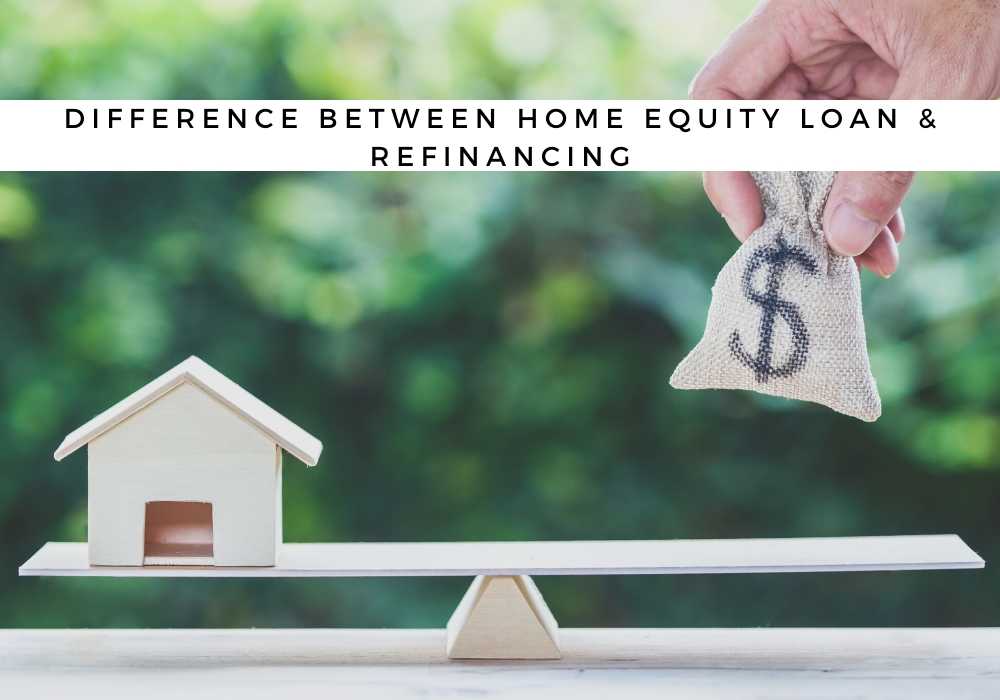
What is the Difference Between a Home Equity Loan and Refinancing?

Though most people believe that their home is a great place to live, others see the value in owning a home. It can be a great investment. However, if you are strapped for cash, it can be a source of ready cash.


You may decide to look into a loan so you can get some cash easily, with a home equity loan or a cash-out refinance loan, though you may just want to refinance your home (to make your payments more bearable.) You need to do your research before you decide how you want to proceed.


What is a Home Equity Loan?

A home equity loan should be looked at as a second mortgage. If you need to borrow money to update your house or do some renovations, you may want to look into a home equity loan. You may also find it helpful if you want to pay off some of your debt (credit cards, car loan, etc.)


To see if you are eligible for a home equity loan, you need to see if you owe less on the home than it is worth. Even if it isn't close to being paid off, you may have a few thousand dollars of home equity.


So, Why Would You Want a Home Equity Loan?

Most people choose home equity loans because you can often get a very low-interest rate on them. It might be cheaper to get a home equity loan for your next car than going through the dealership. If you are paying off high-interest credit cards, three or four percent interest is a lot better. You may actually be able to pay it off sooner than you thought.


What Does It Mean to Refinance Your Home?

When you go to refinance your home, you are just going to pay off one loan with another. You are taking out a new mortgage loan, to cover your old one.


So, Why Would You Refinance Your Home?

There are several reasons why someone would want to refinance their home.


  • To make the payments easier. If you are able to get a better interest rate, you could really drop your monthly payments.

  • To change the terms of the loan. Other people decide that, instead of a thirty-year loan, they want to pay it off sooner. You can refinance your home into a new fifteen-year loan. Your monthly payments should be similar, though you will be able to pay your home off sooner, saving you some interest.


What is a Cash-Out Refinance?

For those people who want to refinance their home, but they also need cash, many lenders also offer a cash-out refinance loan. This allows you to refinance your mortgage and get some cash for different reasons. Your cash-out refinance loan will be more than your current mortgage, so that you can have some money to take care of different things.


So, Why Would You Do a Cash-Out Refinance Loan?

There are a few reasons why you might want to get one of these loans.


  • You can pay off your current mortgage (though you will have a new one)

  • You might be able to pay your home off quicker (or decrease your monthly payments)

  • You have some extra cash to help you pay off debts, do some house renovations, or even buy a large item (such as a car).

  • You only have one payment every month, instead of a mortgage, second mortgage, loans, and credit card bills.


How Should You Choose?

The best way to decide which is best for you is to speak to a professional. He or she can talk to you about your options and what your payments are going to look like so that you can make an informed decision that is going to work best for you.

Read

How Many Homes Should You Tour Before Buying?

If you are beginning the home-buying process, you may begin to wonder how long it will take until you find the perfect home for you and your family. The answer to that varies due to different factors. Check out these three factors on how many homes you will tour before buying:


The State of the Market

A buyer's market is when there are few houses for sale and the ones that are available, sell quickly. This creates a higher demand for houses as people scramble to buy what they can. If the location you are considering seems to be a buyer's market, you may be competing with multiple buyers for the same house. If you are hesitant with a house because you think a better one is out there, someone else may swoop in and sign a contract. This leaves you with fewer options and a long time trying to find a house. If you find yourself in this situation, you will probably need to move as quickly as possible if you want to secure a home.


Knowing What You Want

If you are specific about the type of house you would like, then it is usually much easier for a real estate agent to suggest properties to tour. For example, if you insist on living in a house with a backyard, they will refrain from suggesting a high-rise condo. If you are more open to various options, you have a bigger playing field, and it may take some time to sort through the selection. Before you begin your search, take some time to really consider what you are looking for.


Your Willingness to Compromise

Home buyers usually have a list of things they absolutely need to have in their potential home. However, all of the amenities you are looking for might not be in the right location or fit within your budget. For example, a three-bedroom house a short drive from downtown may cost thousands more than that same type of house further away. If you are willing to compromise on what you want, you can find a home much quicker. 


Finding the perfect house for you can take weeks, months, or even longer. To shorten this length of time, know what you want, and be willing to compromise. Soon, you will be able to find the home you have been dreaming of and begin life as a homeowner.

Read
Categories:   Albion Real Estate | Aldergrove Langley, Langley Real Estate | Anglemont Real Estate | Blind Bay Real Estate | Brookswood Langley Real Estate | Campbell Valley Real Estate | Celista Real Estate | Central Meadows Real Estate | Chilliwack W Young-Well Real Estate | Chilliwack W Young-Well, Chilliwack Real Estate | Citadel PQ Real Estate | Clayton Real Estate | Coquitlam East, Coquitlam Real Estate | Coquitlam West Real Estate | Cottonwood MR Real Estate | Dewdney Deroche, Mission Real Estate | East Central Real Estate | East Newton Real Estate | Financing | First Time Home Buyers Guide | Guildford Real Estate | King George Corridor Real Estate | Langley City, Langley Real Estate | Lindell Beach Real Estate | Magna Bay Real Estate | Metrotown, Burnaby South Real Estate | Mid Meadows Real Estate | Mid Meadows, Pitt Meadows Real Estate | Mission BC Real Estate | Mission BC, Mission Real Estate | Mission Real Estate | Mission-West Real Estate | Mission-West, Mission Real Estate | Mount Pleasant VE Real Estate | Northeast Real Estate | Northwest Maple Ridge Real Estate | Otter District, Langley Real Estate | Port Moody Centre Real Estate | Quay Real Estate | Renfrew Heights Real Estate | Riverwood Real Estate | Royal Heights Real Estate | Sardis West Vedder Rd Real Estate | Scotch Creek Real Estate | Seymour Arm Real Estate | Silver Valley Real Estate | Sorrento Real Estate | South Meadows Real Estate | Southwest Maple Ridge Real Estate | St. Ives Real Estate | Stave Falls, Mission Real Estate | Thornhill MR Real Estate | Thornhill MR, Maple Ridge Real Estate | Upper Delbrook, North Vancouver Real Estate | Websters Corners Real Estate | Websters Corners, Maple Ridge Real Estate | West Central Real Estate | West Central, Maple Ridge Real Estate | Whalley Real Estate | White Rock Real Estate | Whonnock Real Estate
The trademarks REALTOR®, REALTORS®, and the REALTOR® logo are controlled by The Canadian Real Estate Association (CREA) and identify real estate professionals who are member’s of CREA. The trademarks MLS®, Multiple Listing Service® and the associated logos are owned by CREA and identify the quality of services provided by real estate professionals who are members of CREA. Used under license.